All articlesGeneral
Why Small Businesses Get Hacked (And How to Stop It)
22 September 20265 min readBy Omnicron Team
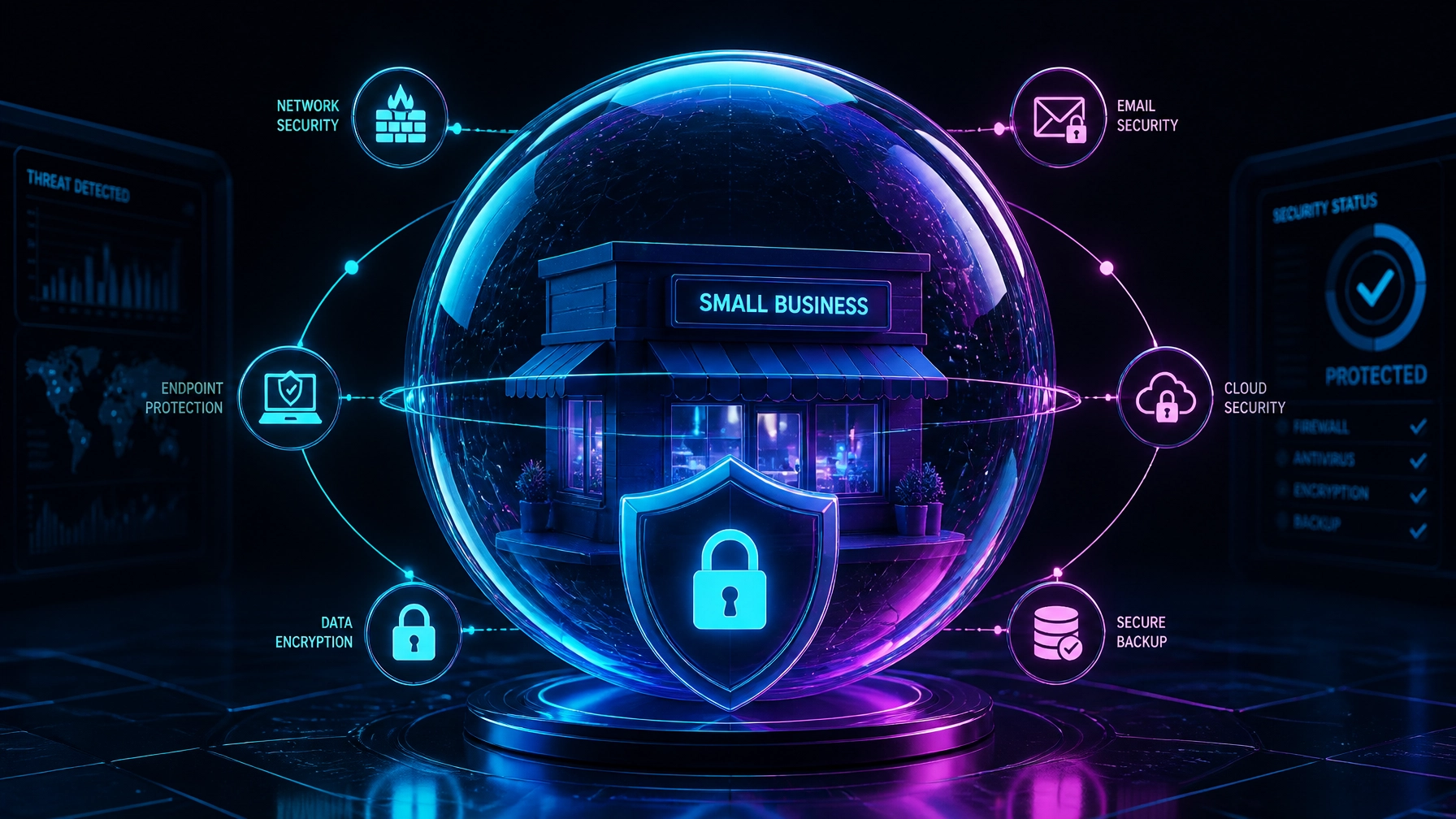
Why Small Businesses Get Hacked (And How to Stop It)

For many small to medium-sized enterprise (SME) owners in Victoria, cybersecurity often feels like a corporate problem reserved for large enterprises, banks, and multinational conglomerates. The prevailing assumption is simple: "Why would a cybercriminal target my local accounting practice, medical clinic, or manufacturing workshop when global corporations have vastly more money?"
Unfortunately, this perception is fundamentally flawed: and dangerous.
According to threat intelligence reports and guidance from the Australian Cyber Security Centre (cyber.gov.au), small businesses are not overlooked by cybercriminals; they are frequently targeted. In fact, SMEs represent a prime gateway for modern cybercrime syndicates due to perceived vulnerabilities, valuable data assets, and interconnected supply chains.
Implementing robust cybersecurity for small business Australia standards is no longer optional. It is a fundamental requirement for operational continuity and commercial survival.
Cybercriminals operate with ruthless economic efficiency. They automate attacks to scan thousands of networks simultaneously, looking for the path of least resistance. Small businesses often appeal to threat actors for several specific reasons:
Unlike large enterprises with dedicated 23/7 Security Operations Centres (SOCs) and dedicated chief information security officers, many SMEs rely on basic consumer-grade antivirus software or ad-hoc IT support. Attackers know that security reviews are less frequent and patching protocols are often delayed in smaller organizations.
Even a modest Victorian business handles sensitive information: client bank details, payroll records, proprietary intellectual property, employee tax file numbers, and confidential communications. This data commands a high price on dark web marketplaces.
Small business employees often use single login credentials across multiple administrative, financial, and cloud applications. Compromising one email account can provide attackers with lateral movement across banking portals, CRMs, and vendor networks.
Many SMEs work as trusted vendors, suppliers, or sub-contractors for larger enterprise clients or government agencies. Cybercriminals frequently target a small engineering firm or law practice not for the firm's direct assets, but to use its trusted network connection as a backdoor into larger corporate targets.

Understanding how attackers breach small business environments is the first step toward effective cyber threat protection for SMEs. The vast majority of successful breaches exploit a handful of predictable vulnerabilities.
Phishing remains the single most common entry point for cyberattacks. Cybercriminals craft convincing emails impersonating the Australian Taxation Office (ATO), banks, freight couriers, or software vendors. When an employee clicks a malicious link or opens a rigged invoice attachment, malware is deployed or credentials are harvested instantly.
Software vendors constantly release patches to fix newly discovered security flaws. When businesses delay updates for operating systems, web browsers, or plugins, they leave known doors wide open. Automated hacker bots actively scan the internet for unpatched systems to exploit within hours of a vulnerability disclosure.
Simple passphrases like Password123 or employee birthdates can be cracked by automated brute-force tools in seconds. When staff reuse these weak passwords across personal and professional accounts, a breach on a retail website instantly exposes the business network to credential stuffing attacks.
Passwords alone are no longer secure. Without multi-factor authentication requiring a secondary verification method (such as an authenticator app prompt), stolen credentials grant attackers immediate, unobstructed access to cloud mailboxes, accounting systems, and file repositories.

Aligning with guidance from cyber.gov.au, businesses can drastically reduce their risk profile by implementing baseline security controls:
Enforce Multi-Factor Authentication (MFA): Mandate MFA across every business account, especially email, cloud storage, and financial software.
Automate Patch Management: Ensure operating systems, productivity apps, and firewall firmware update automatically without relying on manual staff reminders.
Secure Backup Protocols: Maintain regular, automated backups stored offline or in an immutable cloud repository. Test restoration procedures quarterly to ensure resilience against ransomware encryption.
Principle of Least Privilege: Restrict user permissions so staff members only access the specific folders and applications required for their daily role.
Implementing and maintaining these controls requires continuous vigilance, specialist expertise, and proactive monitoring: resources that most small businesses simply do not have in-house.
This is where a dedicated, security-first partner changes the equation.
At Omnicron, we deliver specialized managed IT services designed specifically to protect Victorian SMEs from technical downtime and evolving cyber threats. Rather than treating security as an afterthought, our approach integrates proactive defence into every layer of your IT infrastructure:
Comprehensive Security Reviews: We evaluate your current environment to uncover hidden vulnerabilities before attackers do. Learn more about our Security Reviews.
Systematic Remediation: We patch gaps, enforce strict access controls, and harden endpoints against credential theft and malware.
Managed Protection & OmniShield Live Defence: Our Australian-based support team provides continuous, real-time monitoring of your IT environment, giving you clear visibility into threat detection, encryption status, and system uptime. Explore our scalable Managed Services and transparent pricing tiers on our Pricing Page.

Cyber threats are sophisticated, but defending your business does not have to be complex. Partnering with a local, security-focused IT provider ensures your business remains resilient, compliant, and operational.
Take the first step toward total peace of mind. Visit Omnicron today to explore our SecureStart onboarding process, review our Service Areas across Victoria, or schedule your professional Security Review.
Protect your operations, safeguard your clients, and secure your business growth with Omnicron.

Book a free security check and we'll show you where your business stands clear next steps, no jargon, no obligation.
Or explore our free security tools — 30+ scanners, checkers and assessments, free with an account.