All articlesGeneral
Microsoft Copilot vs. ChatGPT Enterprise: Which AI Tool Is Safer for Your Business?
15 September 20265 min readBy Omnicron Team
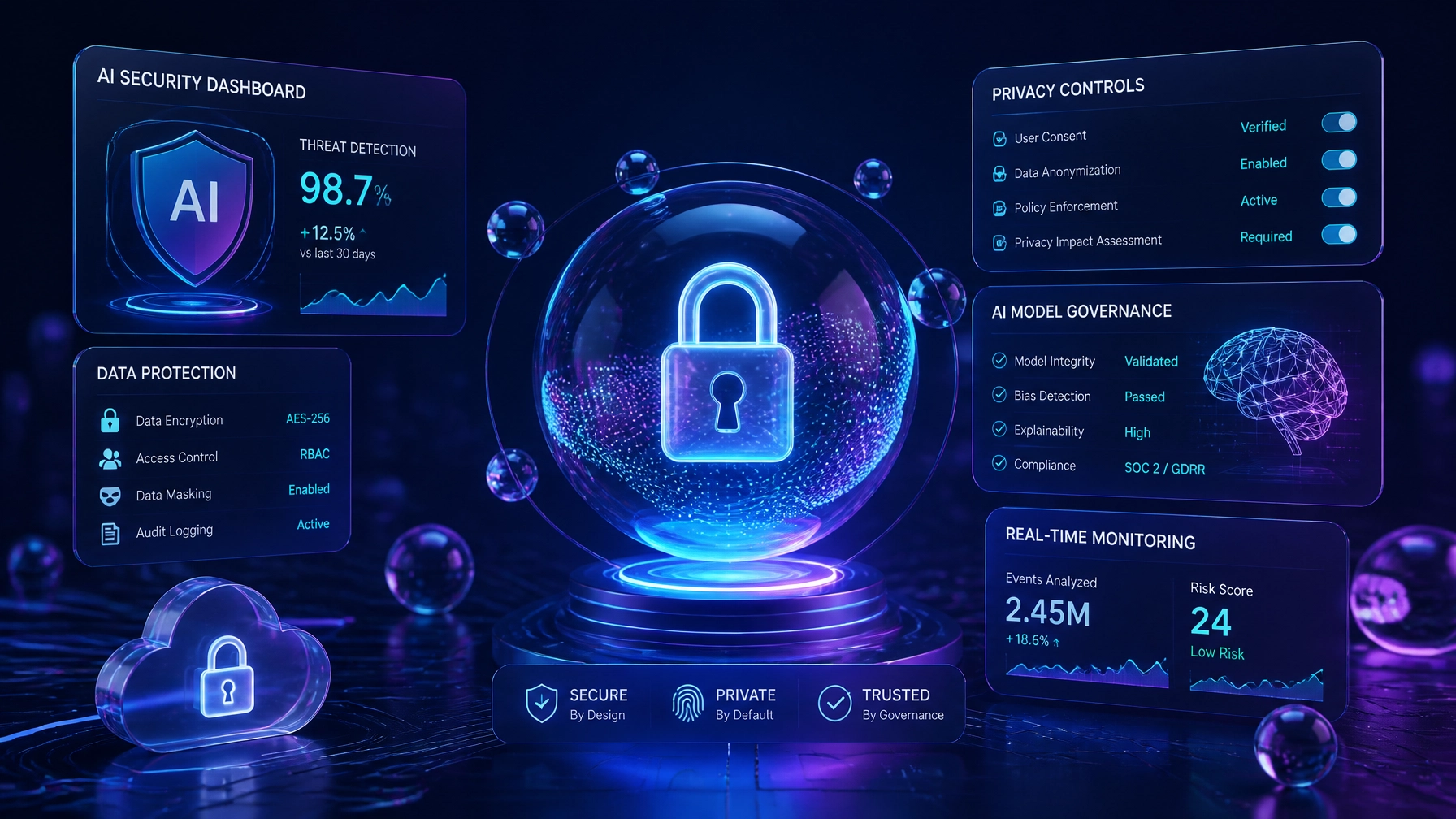
Microsoft Copilot vs. ChatGPT Enterprise: Which AI Tool Is Safer for Your Business?

Artificial intelligence has transitioned from an experimental novelty to a core operational utility for small and medium-sized businesses (SMBs) across Victoria. From drafting client correspondence to analyzing complex financial data, productivity tools powered by large language models (LLMs) are everywhere. However, for business owners and IT leaders in Melbourne, adoption brings a critical question: Which enterprise AI platform offers the strongest data privacy and security posture?
While free consumer-grade tools introduce severe compliance vulnerabilities known as "Shadow AI," enterprise tiers from major providers promise robust security foundations. In this comprehensive comparison, we evaluate Microsoft 365 Copilot, ChatGPT Enterprise (OpenAI), and Claude Enterprise (Anthropic) to help Victorian businesses make informed, risk-averse deployment decisions.
Before comparing enterprise platforms, organizations must understand the baseline risk. When staff members paste confidential client records, proprietary formulas, or financial statements into free consumer AI chatbots, that data is frequently ingested to train future public models.
This practice violates privacy principles, compromises commercial confidentiality, and introduces significant regulatory exposure under the Privacy Act. According to official guidance from the Australian Cyber Security Centre (ACSC) available at cyber.gov.au, unmanaged generative AI usage creates unmonitored data leakage paths.
To mitigate these risks safely, organizations must transition staff away from consumer tools and mandate enterprise-grade solutions equipped with strict data isolation and non-training guarantees.

At the enterprise level, the leading platforms share several vital security baselines:
No Model Training on Tenant Data: All three enterprise tiers explicitly state that customer inputs, outputs, and internal files are not used to train public models.
Compliance Frameworks: Each vendor provides SOC 2 compliance, robust encryption standards (AES-256 at rest, TLS 1.3 in transit), and Data Processing Addendums (DPAs) aligned with global privacy standards.
Administrative Controls: Organizations retain centralized management capabilities, including Single Sign-On (SSO), Role-Based Access Control (RBAC), and enterprise audit logs.
Despite these shared foundations, their architectural approach to data residency, retention, and ecosystem integration differs significantly.
For organizations already embedded in the Microsoft 365 ecosystem, Copilot operates entirely within your existing tenant boundary.
Data Residency: Data stays within your Microsoft cloud environment, inheriting your established regional compliance and residency settings.
Governance via Purview: Copilot integrates seamlessly with Microsoft Purview, automatically applying Data Loss Prevention (DLP) policies, sensitivity labels, and retention rules.
The Oversharing Risk: Because Copilot relies on Microsoft Graph, it honors existing user permissions. If internal SharePoint or OneDrive permissions are misconfigured, Copilot can instantly surface sensitive files to unauthorized employees. Proper permission hygiene and a professional Security Review are prerequisites before rollout.
OpenAI’s enterprise offering provides a high-performance, managed environment tailored for advanced reasoning, coding, and multi-functional workflows.
Data Isolation: Enterprise interactions are isolated at the organization level within OpenAI’s secure cloud infrastructure.
Retention Policies: Unlike consumer tiers, conversation history is not used for training, but retention defaults to indefinite storage until administrators configure custom expiration rules (typically a 30-day minimum).
Integration Overhead: Connecting ChatGPT Enterprise to internal business systems requires external connectors or APIs, requiring security teams to manage multi-vendor governance across OpenAI and third-party SaaS tools.
Developed by Anthropic, Claude Enterprise emphasizes constitutional safety, robust analytical capabilities, and strict data minimization.
Zero-Retention Policy: The Enterprise and Team web platforms operate under a strict zero-retention policy, wiping conversation logs from server memory at the end of each session.
Model Context Protocol (MCP): Claude utilizes secure, read-only connectors to access external repositories like SharePoint or Google Drive. However, introducing MCP creates an additional infrastructure layer that requires careful scoping to prevent prompt injection and data exfiltration risks.

Evaluating AI safety also requires examining financial investment:
Microsoft 365 Copilot commands a per-user monthly subscription fee on top of existing M365 enterprise licenses, making it cost-effective for organizations already utilizing Microsoft productivity suites.
ChatGPT Enterprise and Claude Enterprise operate on higher-tier per-seat pricing models designed for medium-to-large enterprises, reflecting their advanced standalone reasoning engines and flexible deployment options.
For small businesses seeking expert guidance on license selection, configuration, and cost optimization, partnering with a trusted provider of managed IT services Melbourne ensures investments align with both operational budgets and strict security requirements.
To successfully adopt enterprise AI without compromising network integrity, Victorian medical clinics, legal practices, accounting firms, and professional service businesses should follow a structured approach:
Audit Existing Permissions: Clean up overshared SharePoint directories, cloud drives, and internal user access controls.
Establish AI Policies: Formally update staff handbooks to prohibit consumer-grade AI tools and mandate approved enterprise platforms.
Deploy with Expert Oversight: Utilize specialized IT consulting Melbourne services to configure tenant boundaries, DLP rules, and monitoring solutions.
Implement Continuous Protection: Pair AI deployment with proactive threat detection to guard against sophisticated data exfiltration attempts.
Navigating the complexities of enterprise artificial intelligence requires a security-first approach. At Omnicron, we help Victorian small and medium-sized businesses secure their digital environments from the ground up. Whether you need an initial vulnerability assessment through our SecureStart program or comprehensive, real-time IT monitoring, our local Australian support team ensures your business remains resilient against evolving cyber threats.
Contact our Melbourne team today to discuss how we can help your business safely select, deploy, and govern enterprise AI tools.
Book a free security check and we'll show you where your business stands clear next steps, no jargon, no obligation.
Or explore our free security tools — 30+ scanners, checkers and assessments, free with an account.